Most People Are Using Salicylic Acid Wrong and Here Is How to Tell If You Are 1 of Them
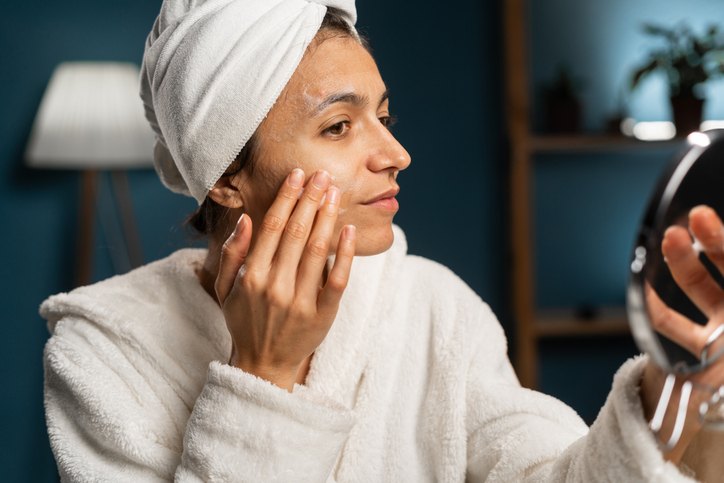
If you’ve spent five minutes on skincare TikTok, you already know salicylic acid is basically the main character of the acne aisle. It’s in cleansers, toners, serums and spot treatments at pretty much every drugstore, which is exactly why so many people mess it up. Used the right way, it clears clogged pores and smooths bumpy texture. Used the wrong way, it can wreck your moisture barrier and leave you red, flaky and worse off than when you started.
Here’s what nobody told you before you added it to your cart.
Salicylic acid is a beta hydroxy acid (BHA) that exfoliates your skin chemically instead of scrubbing it. It comes from willow tree bark, though a lot of it is made in a lab now. The important part for acne-prone skin is that it’s oil-soluble, so it can actually get inside your pores instead of just sitting on the surface like water-based acids do. It also breaks down the stuff that glues dead skin cells together, which is how it unclogs hair follicles and clears buildup.
“Oil-soluble, meaning it can penetrate the pores to break down the build-up of dead skin cells, excess oil, and other impurities that can lead to acne or clogged pores,” Sofie Pavitt, NYC-based celebrity esthetician and founder of Sofie Pavitt Face, told Elle.
Beyond unclogging pores, salicylic acid does a bunch of things at once. According to Very Well Health, it can smooth bumpy texture, fade dark spots, shrink blemishes, control oily skin and even out overall skin tone. It’s also used on warts, calluses and corns.
The same exfoliating action gives it anti-aging perks. It softens fine lines, boosts collagen, speeds up cell turnover and helps other products soak in better, which is why you’ll see it built into fancier routines even for people who aren’t fighting acne.
Concentration is the single most important thing to pay attention to, and it’s the part beauty influencers usually skip past. Over-the-counter products range from 0.5 percent to 2 percent, according to board-certified dermatologists. Cleansers and toners tend to sit in the 0.5 percent to 1 percent zone, while spot and targeted treatments usually go up to 2 percent, which is the highest strength the FDA lets you buy without a prescription. If you’re brand new to this, start at the low end and work your way up. There is zero prize for jumping straight to 2 percent.
pH matters too. Look for something between 3 and 4 for it to actually work the way it’s supposed to. Some brands print it right on the label.
After that, it really is just personal preference and whatever your skin is doing.
Because any chemical exfoliant can dry you out, salicylic acid works best when you buddy it up with hydrating, calming ingredients. The three most reliable teammates are hyaluronic acid, ceramides and niacinamide. Hyaluronic acid pulls water back into your skin, ceramides help rebuild the barrier and niacinamide chills out redness while keeping oil in check. Layering these alongside your BHA is the difference between exfoliation that works and exfoliation that leaves your face feeling like sandpaper.
How you apply it matters just as much as what you buy. According to Health.com, here are the ground rules.
That last one is huge. Stacking salicylic acid with benzoyl peroxide or a retinoid like tretinoin is a fast track to a compromised barrier, no matter how tempting it is to throw everything at a breakout at once.
Even people who love salicylic acid tend to trip over the same handful of errors, using too much, ignoring the fine print and pushing through irritation instead of pulling back.
“Enthusiastic over-exfoliation can be counterproductive to the health of your skin. For particularly sensitive skin, I would say to be careful with your application of stronger acids such as glycolic and salicylic as these can cause further redness and irritation by damaging your skin’s moisture barrier,” Dr Ewoma Ukeleghe, founder of SKNDOCTOR, told Women’s Health.
“It’s so important to properly read the instructions. If it’s an acid-based mask check how long it should be left on for and follow this guidance properly to avoid causing any damage to your skin’s hydrolipidic barrier,” Ukeleghe said.
By signing up, I agree to the Terms and Privacy Policy and to receive emails from Us
“This myth is particularly common. In my opinion, your daily skincare shouldn’t be painful, a slight tingling sensation from a salicylic acid-based product or mask shouldn’t be too much to worry about, but in general avoid anything that leaves you red, sensitive or massively tingly. Know when to stop, If your skin is irritated, give it a break,” Ukeleghe said.
For most people, salicylic acid is chill and any side effects are mild. Still, it helps to know the signals so you can pull back before things get bad. The most common reactions are mild stinging, dryness, general irritation, flushing or reddening and a warm feeling on your face. If any of those stick around past the first few uses or start getting worse, that’s your cue to space out how often you use it, drop to a lower percentage or take a full break.
Exclusives you can't get anywhere else
Sign up for weekly celebrity news, exclusives, and original reporting delivered straight to your inbox.
This page aggregates a public headline from Us Weekly for demo purposes. Article body, images, and metadata belong to the original publisher. Follow the link above for the full, canonical story.